Why Self-Compassion Feels Dangerous to High Achievers—And Why It’s Actually Your Greatest Advantage
The Hidden Cost of “Pushing Through”
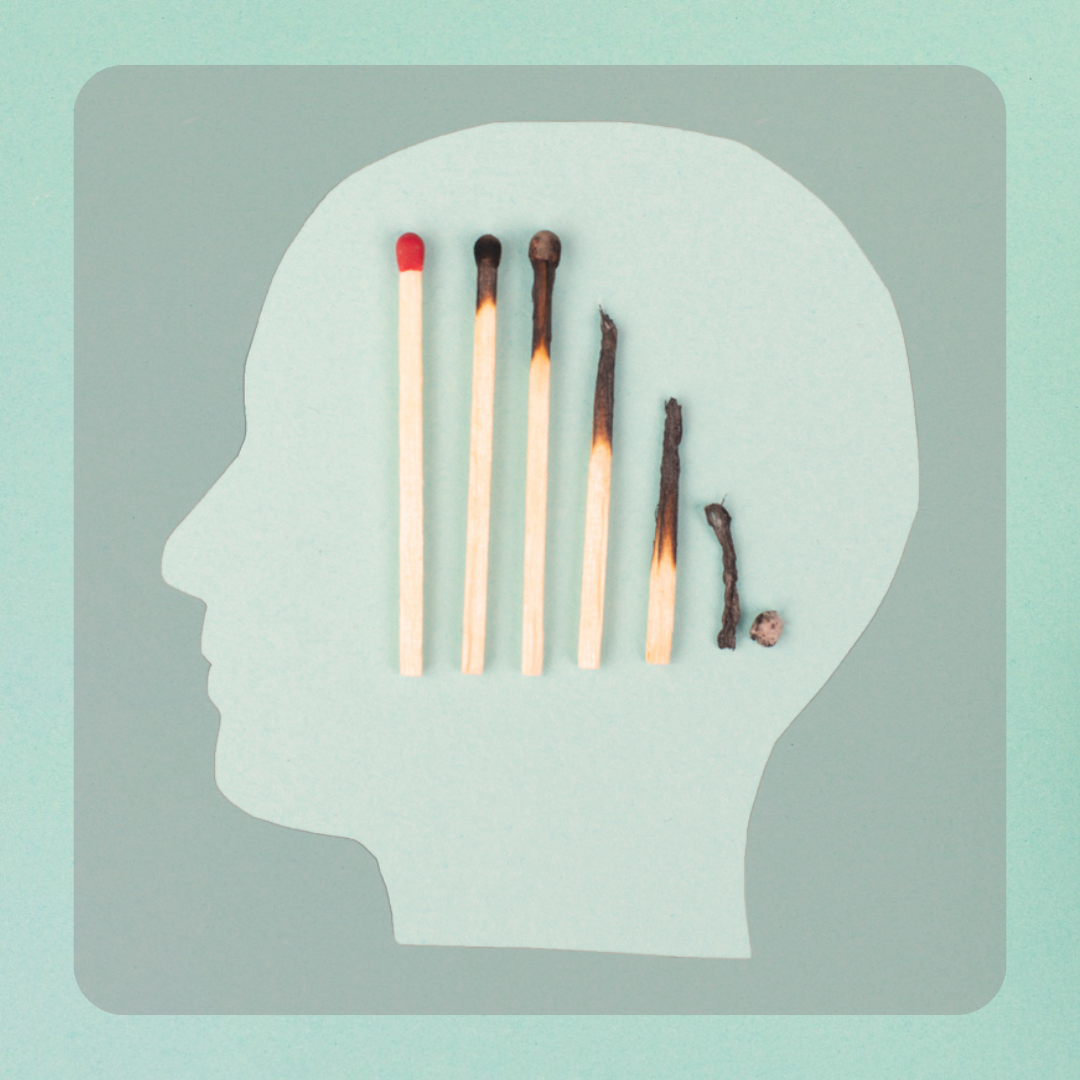
If self-criticism actually worked, high achievers would be the most energized, fulfilled people on the planet.
But we're not. We're exhausted. Snapping at the people we care about and burning out while pushing harder than ever.
Here’s what I’ve learned after working with hundreds of high-performing professionals: The belief that self-judgment drives growth is one of the most destructive myths in achievement culture.
Why Self-Compassion Feels So Wrong (and Why That Matters)
I see it in my practice every day. Brilliant executives, dedicated physicians, driven entrepreneurs—all convinced that being harder on themselves equals better results.
But here's what decades of research actually show: People who practice self-compassion are more motivated, not less. They take more responsibility, recover faster from setbacks, and stay committed to their goals longer.
Why? Because they're not wasting precious mental energy on shame and self-attack.
Here’s how some of my clients describe it:
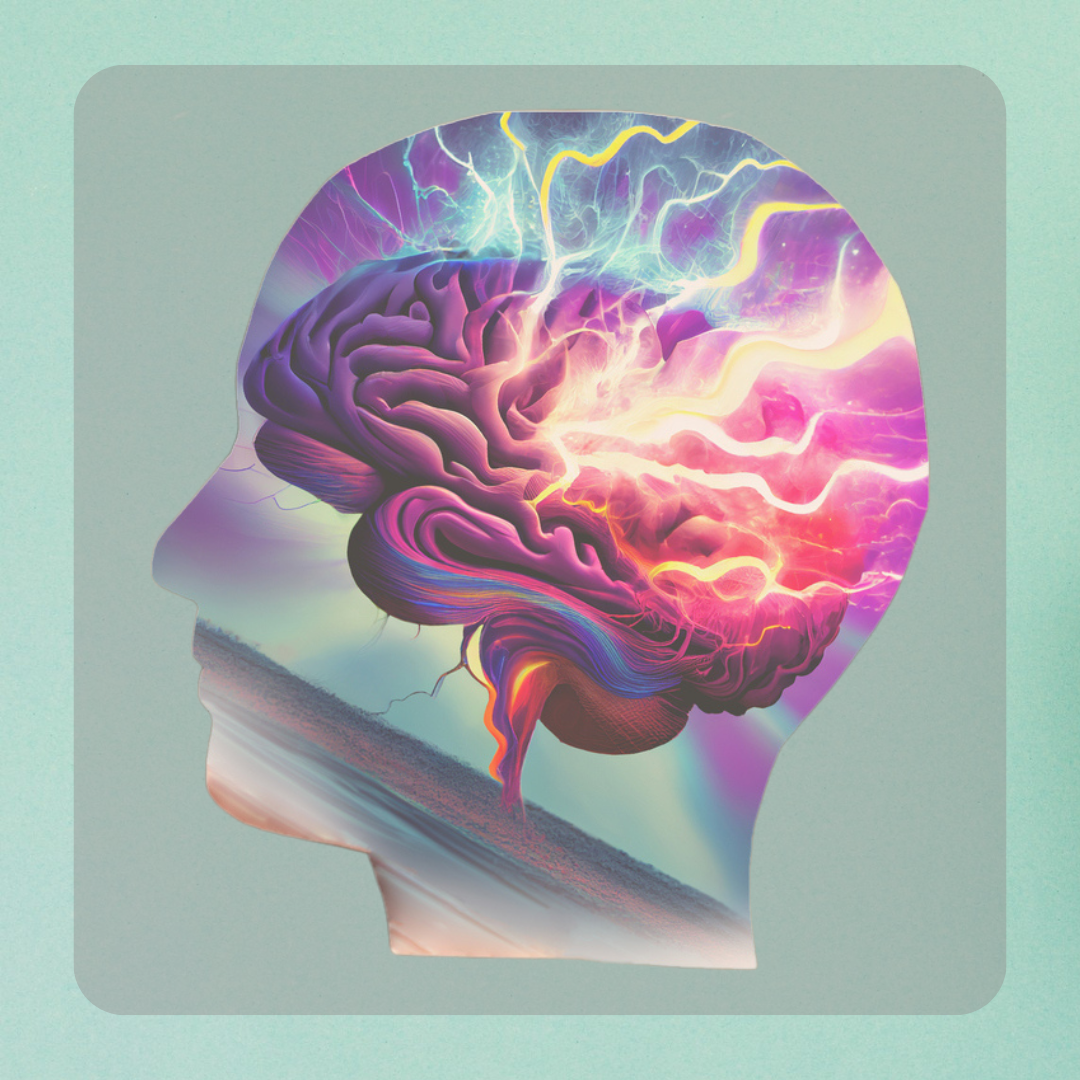
“After a tough call, I paused and said to myself, ‘This is hard.’ It felt grounding—just for a moment. Then my brain lit up like I’d missed an alarm. I thought, ‘Wait… shouldn’t I be punishing myself right now?’”
“If I’m kind to myself, I’m slacking. If I’m hard on myself, at least I’m being responsible.”
“You make a mistake. You try to stay present, objective, and even kind. It helps. For a moment. Then comes the backlash: ‘That was too easy. I must be letting myself off the hook.’”
This isn’t weakness. It’s nervous system conditioning.
You’ve trained your brain to associate pressure with productivity. When you try something new—such as compassion—your system flags it as a potential danger.
But here’s the truth: Real accountability isn’t cruelty. It’s clarity.
And clarity requires a regulated nervous system, not internal warfare.
You Don’t Have to Be Woo-Woo to Reset Under Pressure
Self-kindness has a branding problem. It often gets lumped in with self-indulgence or making excuses. No wonder high achievers resist it.
When I mention breathing techniques to clients, I sometimes get that look—the subtle eye-roll that says, “Are we about to do yoga in here?”
But when I add, “This is the same method Navy SEALs rely on in combat zones,” everything shifts. Eyes refocus—curiosity returns. We’re no longer talking about fluff. We’re talking about performance.
The technique is called box breathing: inhale for a count of 4, hold for 4, exhale for 4, hold for 4. Repeat.
Why it works: Box breathing stimulates the vagus nerve, helping to shut down fight-or-flight mode and activate the parasympathetic system—the part that keeps you calm, focused, and fully present. Research shows that it improves attention, lowers cortisol levels, and increases HRV (heart rate variability), a key marker of resilience under stress.
And yes—it has ancient yogic roots. But it was redesigned for high-stakes leadership. That’s why I teach it. Because it works.
Self-kindness isn’t indulgence. It’s strategy. It steadies your nervous system, allowing you to respond instead of react. It makes you sharper under pressure.
That’s not soft. That’s smart.

Why Pausing Is More Powerful
Than You Think
Here’s another example of self-kindness that feels smart, not soft: taking a practical pause to recover faster from a setback.
Let’s be honest: for high performers, pausing often feels like a luxury. Or worse, a waste of time. When your default mode is productivity, your value gets tied to doing—checking boxes, solving problems, staying ten steps ahead.
But what if the most powerful shift you could make wasn’t in your calendar—but in your nervous system?
High achievers often rely on mental toughness to navigate challenging situations. But true resilience isn’t about white-knuckling—it’s about staying connected to yourself.
How to Interrupt Spinning Out or Pushing Too Hard
Our bodies are honest. When your mind is stuck in overdrive, your body contracts. Breath gets shallow. Focus narrows. That’s the stress response.
But when you take a conscious pause, something shifts. The breath slows. The mind quiets. You start to see clearly again—not from urgency, but from awareness.
That’s not a slowdown. That’s a strategy.
These pauses—however brief—recalibrate your internal operating system. And that clarity? It’s often where your best decisions come from.
Because the pause isn’t just a break from the chaos. It’s a mental reset and a return to clarity.
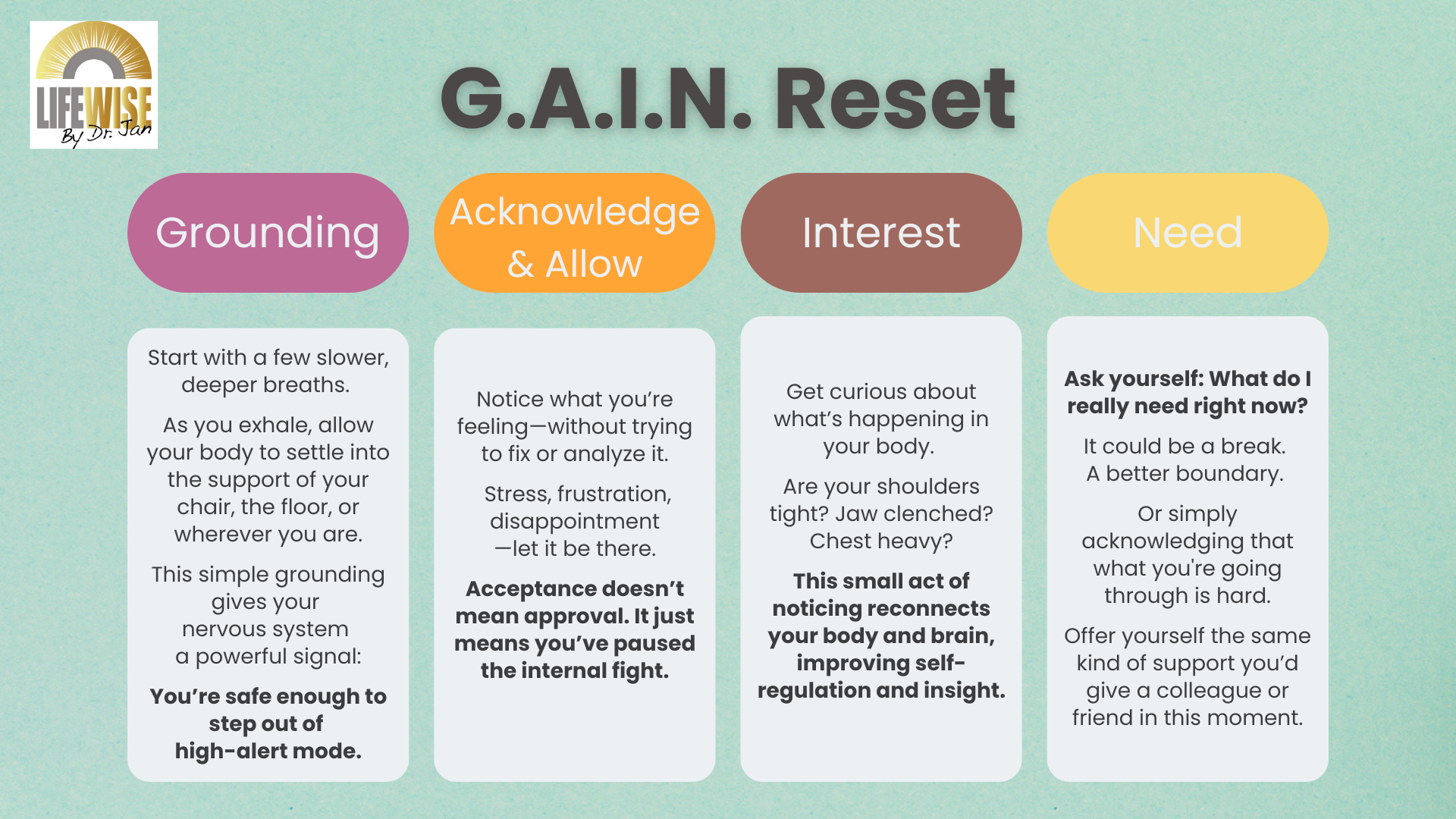
The GAIN Reset: A 60-Second Strategy That Works
One physician described how she used to spiral after challenging patient encounters. Her inner critic would intensify, labeling her careless or inadequate. She’d square her shoulders, set her jaw, push harder—and replay the interaction for hours.
I said, “That’s burnout disguised as productivity.” So I introduced her to a quick mental reset called GAIN.
“I promise it won’t make you slower. It will make you steadier.”
Here’s how it works.
Final Thought:
You Don’t Need to Be Tougher—
You Need to Be Smarter
Self-compassion doesn’t lower your standards.
It removes the blindfold that’s been keeping you from seeing clearly.
It’s the difference between white-knuckling your way through success…
and sustaining it with clarity and composure.
So next time your inner critic says “You should be tougher,” try this instead:
“I’m choosing to be smarter.”
Ready to move beyond surviving success?
If you're a high-achieving professional who wants to lead with clarity and resilience—not just pressure—I’d love to help. Schedule a complimentary consultation.
